Two hormones that help keep you lean: growth hormone + testosterone
Growth hormone
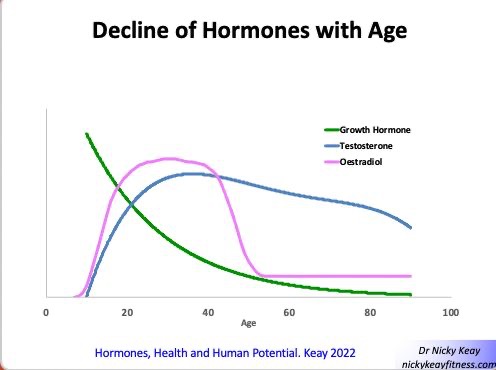
Growth hormone helps maintain muscle, burn fat, and keep you energized. Levels peak in early adulthood and slowly decline with age, especially after 30. Stress can make levels drop faster.
When growth hormone is balanced, it works with cortisol and adrenaline to burn fat and build muscle. IGF-1 is a marker for growth hormone because the liver makes IGF-1 when growth hormone rises.
High-intensity, short bursts of exercise (like sprints, burpees, box jumps) increase growth hormone.
Ways to support growth hormone:
- Eat healthy protein and fats; avoid saturated fats
- Try fasting if appropriate
- Exercise, especially short intense bursts
- Limit alcohol
- Sleep early—growth hormone peaks early in the sleep cycle
Testosterone
Balanced testosterone also supports a lean body. Levels naturally decline between ages 20–40, and fall further by menopause.
Sources of testosterone in women:
- 50% made from DHEA in skin and fat
- 25% adrenal glands
- 25% ovaries
Even after menopause, the ovaries still make testosterone. High testosterone can happen in PCOS or menopause because insulin resistance can cause the ovaries to make more testosterone.
Signs of low testosterone:
- Feeling weak or fragile
- Hair loss at temples
- Low mood, low motivation
- Thinning under-arm/pubic hair
- Loss of height or hunched posture
Foods that lower testosterone:
- Bread and pastries
- Sugary drinks
- Diet soda and coffee
Ways to raise testosterone naturally:
- Lift weights/build muscle
- Eat whole foods + leafy greens
- Herbs like fenugreek, tribulus, and ginkgo biloba
- Reduce hormone-disrupting chemicals
High testosterone + insulin resistance
High testosterone and insulin resistance fuel each other. They can lead to:
- weight gain
- acne
- facial hair
- irregular periods
- diabetes risk
To fix this:
- Improve insulin sensitivity
- Reduce androgens (testosterone)
Hormone therapy (estrogen + progesterone) may help:
- Oestrogen increases SHBG, which lowers testosterone and improves insulin sensitivity
- Progesterone boosts metabolic rate and indirectly lowers testosterone
Taking testosterone or androgen-like hormones can worsen insulin resistance and weight gain.
Other supports
- Magnesium may reduce insulin resistance and improve sleep, adrenal function, cravings, and inflammation
- Good circadian rhythm helps regulate blood sugar (morning protein + sunlight, dim light at night)
- Exercise improves insulin sensitivity and builds mitochondria
- Hormonal birth control with high androgen effects can reduce muscle gain and increase insulin resistance