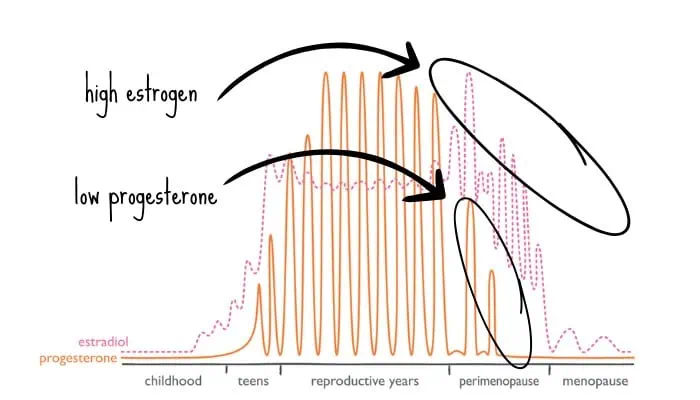
Oestrogen & Progesterone in Perimenopause Vs Menopause
During perimenopause, progesterone drops first, while oestrogen stays active for longer. This is the opposite of puberty. Because these hormones no longer balance each other, symptoms can appear.
- Perimenopause = a hormone ”storm”
High, fluctuating oestrogen + falling progesterone - Menopause = the ”calm” after the storm
Both hormones are low and more stable – but other symptoms may occur due to LOW hormone levels.
The “Second Puberty”
Perimenopause is sometimes called a second puberty. The changing levels of oestrogen can cause:
- Night sweats
- Mood swings
- Very heavy periods
This phase can last up to 12 years before the final period.
Perimenopause vs Menopause
- In perimenopause, oestrogen is often high and unstable because the ovaries still make hormones.
- In post-menopause, oestrogen is naturally low. This is normal for humans. Some women feel better with lower oestrogen, especially if they previously had high-oestrogen conditions like endometriosis.
HRT is used to relieve symptoms, not to “fix” a hormone deficiency.
Oestrogen: the Roller Coaster
From the late 30s onward, oestrogen can swing dramatically, sometimes rising much higher than teenage levels, then dropping very low. This happens repeatedly during perimenopause.
High oestrogen symptoms:
- Breast tenderness
- Heavy periods
- Water retention
- PMS or irritability
- Histamine reactions
Low oestrogen symptoms:
- Low mood or depression
- Weight gain
- Hot flushes and night sweats
(more common in late perimenopause and post-menopause)
Progesterone: the First to Fall
Progesterone declines early in perimenopause. This matters because progesterone helps calm the nervous system and soften oestrogen’s effects.
Progesterone drops because it is only made after ovulation, and ovulation becomes less regular with age. You may still get a bleed (period) without ovulating.
Low progesterone symptoms:
- Poor sleep
- Heavy periods
- Frequent migraines