Understanding Oestrogen
“Oestrogen” is a general word. It actually refers to several different types:
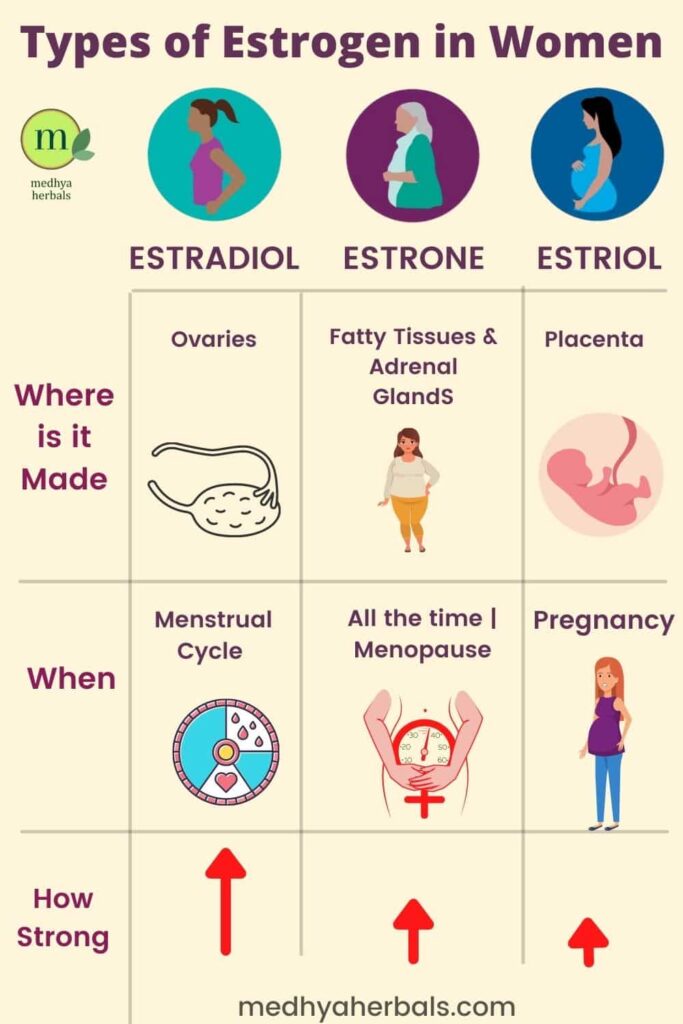
- Oestradiol (E2): Made by the ovaries. This is the main oestrogen during reproductive years and the strongest form. It’s the type often used in HRT.
- Oestrone (E1): Made mainly from body fat. This becomes the main oestrogen after menopause.
- Oestriol (E3): The main oestrogen during pregnancy.
- Ethinylestradiol: A synthetic oestrogen found in the contraceptive pill.
- Xenoestrogens: Oestrogen-like chemicals found in plastics and other environmental toxins.
Each type affects the body differently and acts on different tissues.
Where Oestrogen Comes From
- Before menopause, most oestrogen is made in the ovaries.
- Smaller amounts are made by converting testosterone into oestrogen (called aromatisation).
- After menopause, oestrogen levels are low and most production comes from aromatisation, mainly in fat tissue, but also in the brain, skin, bones, and blood vessels, also adrenal glands.
Low Oestrogen Can Still Cause Imbalance
You can have low oestrogen but still have too much compared to progesterone. This imbalance can cause symptoms. In the later phases of perimenopause (not having periods), ovarian oestradiol drops to about 10% oof what was your PEAK oestradiol levels.
Common Reasons for Oestrogen Imbalance
- Hormonal birth control
The pill contains a strong synthetic oestrogen. It can overwhelm the body and affect gut health and oestrogen processing. - Poor oestrogen clearance
Oestrogen must be broken down by the liver and gut and then removed through bowel movements. If this process is slow, oestrogen builds up. - Perimenopause
Before menopause, oestradiol can temporarily rise—sometimes much higher than earlier in life—before eventually falling. - Insulin resistance
Common after menopause and in PCOS. It can increase oestrone levels. - Histamine overload
Oestrogen increases histamine, and histamine increases oestrogen. This creates a cycle that can worsen symptoms like PMS, pain, and heavy periods. Reducing histamine (for example, limiting cow’s dairy) can help some women. - Oestrogen sensitivity
Symptoms depend not only on how much oestrogen you have, but how sensitive your body is to it.
Sensitivity increases with inflammation, high histamine, or iodine deficiency.
Sensitivity may decrease with diets rich in plant oestrogens (legumes, nuts, vegetables).
Teenagers are naturally more sensitive to oestrogen, which is why heavy periods are common at that age. Also progesterone is produced long after the oestrogen, so teenage girls are raging on oestrogen alone.
Key Takeaway
Balancing oestrogen isn’t just about hormone levels. It also depends on gut health, liver function, inflammation, environmental exposures, and regular bowel movements. Reducing exposure to environmental oestrogens (like plastics and some hygiene products) can make a real difference.